Showing scale so nobody asks how big it is
Jewellery makers · July 5, 2026 · 4 minute read
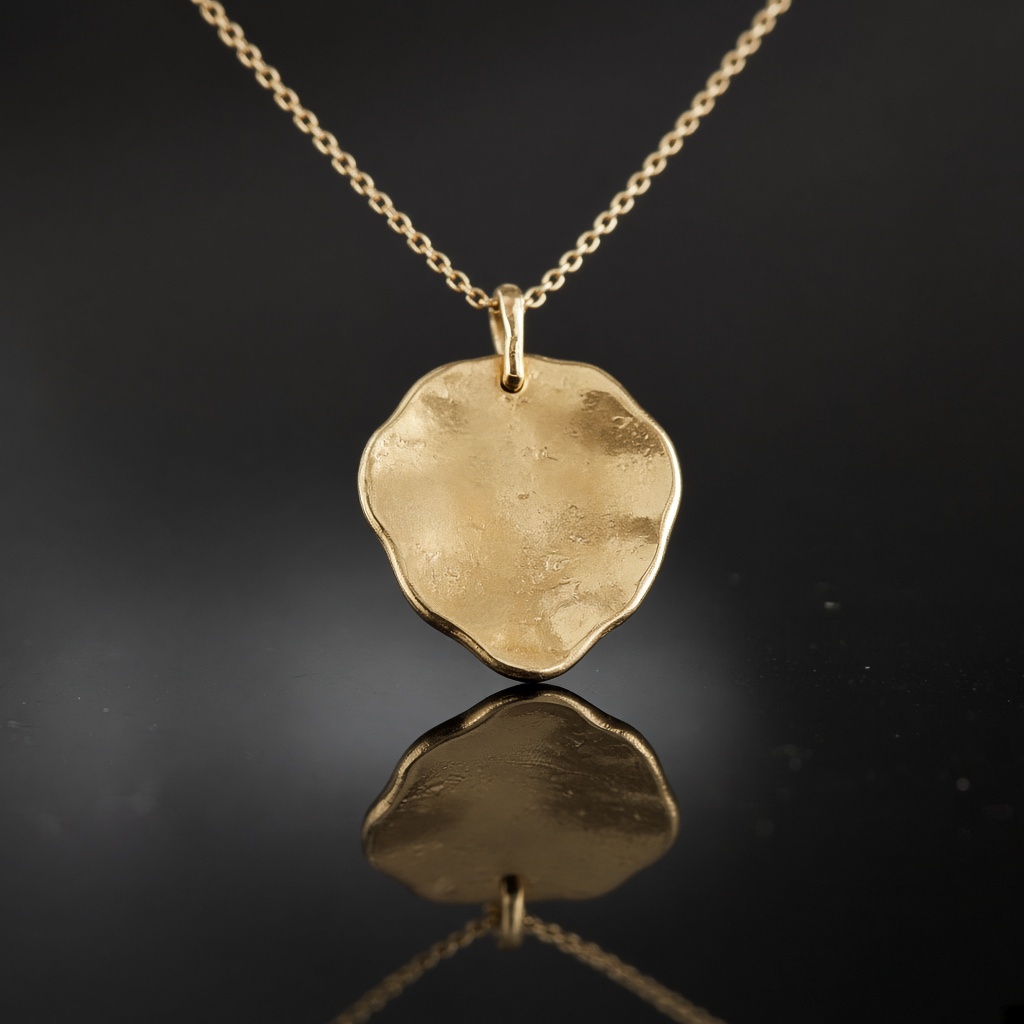
Every jewellery listing has the dimensions in the description. Almost every jewellery seller still gets asked how big it is, and a steady proportion of returns come from buyers who read the measurement, formed a mental picture, and were wrong.
This is not carelessness on the buyer's part. Very few people can convert "pendant drop 22mm" into an image without holding a ruler, and nobody does that while browsing on a phone.
Photographs override text
When a photograph and a description disagree, the photograph wins. This is worth internalising, because it means a close-up macro shot of a delicate ring actively contradicts your measurement.
Macro photography removes every cue the brain uses to judge size. A ring filling the frame with no context reads as large, regardless of what the caption says, because we are used to seeing objects that fill our vision being substantial. The buyer forms an expectation from the image and reads the number as a detail.
The fix is not to stop taking macro shots — they show craftsmanship and they sell. It is to make sure at least one photograph carries scale, and that it appears early in the listing rather than seventh.
The three ways to show scale, in order of usefulness
Worn. A ring on a finger, earrings in an ear, a pendant at the collarbone. This is the most informative option because it answers the question buyers are actually asking, which is not "how many millimetres" but "how will this look on me".
The objection is that hands vary. That is real but overstated — state the model's ring size or approximate hand size in the description and buyers calibrate readily. A photograph on a hand with a stated size is far more useful than no photograph at all.
A familiar object. A coin, a matchstick, a pencil tip. Coins work particularly well because the buyer knows the size precisely and can compare directly. Choose a coin that is common where your customers are, and say which one it is.
A ruler or scale card. Least attractive, most precise. Worth including as a secondary photograph on anything where precision genuinely matters — signet rings, bangles sized to a wrist, anything sold by internal diameter.
Most successful shops use worn as the primary scale cue and a ruler shot buried further down for the buyers who want exactness.
Photograph the smallest and largest of a range together
If you make a piece in several sizes, one photograph showing them side by side does more than three separate listings' worth of description.
The same applies to collections: photographing the whole range together, once, gives buyers a reference they can apply to every individual listing afterwards. It is a single image that reduces questions across your entire shop.
Chains and drops need their own treatment
Necklaces have a specific failure mode: the chain length determines where the pendant sits, and that is the thing buyers care about and the thing photographs communicate worst.
A necklace laid flat on a surface tells you nothing about where it will fall. Photograph it worn, or at minimum photograph it against a neck form. If you sell one pendant on several chain lengths, a single diagram-style photograph showing the drop points is worth more than any styling.
Say the measurement in a way people can picture
A last note that is about words rather than photographs. Convert your measurements into references.
"Pendant 22mm, roughly the width of a one euro coin" is dramatically more useful than "pendant 22mm". "Hoop diameter 30mm, about the size of a two pence piece" lands instantly. This costs you nothing and removes the mental arithmetic that most buyers will not do.
Pair that with a scale photograph and the question stops arriving.
Where the scale scenes fit
If you are staging photographs rather than styling a full shoot, the hand and familiar-object scenes exist for exactly this. They give you a scale reference without needing a hand model available, and they stay consistent across a collection photographed over weeks, which a series of different friends' hands will not.
The rule stays the same either way: at least one image in every listing must let a stranger judge the size without reading anything.