Soups, stews and one-pot dishes
Brown food in a bowl is the hardest photograph in any kitchen
A stew has no edges, no height and one colour. Everything that makes it worth eating happens below the surface, where a camera cannot go.
Sized and staged for Wolt · efood · Instagram
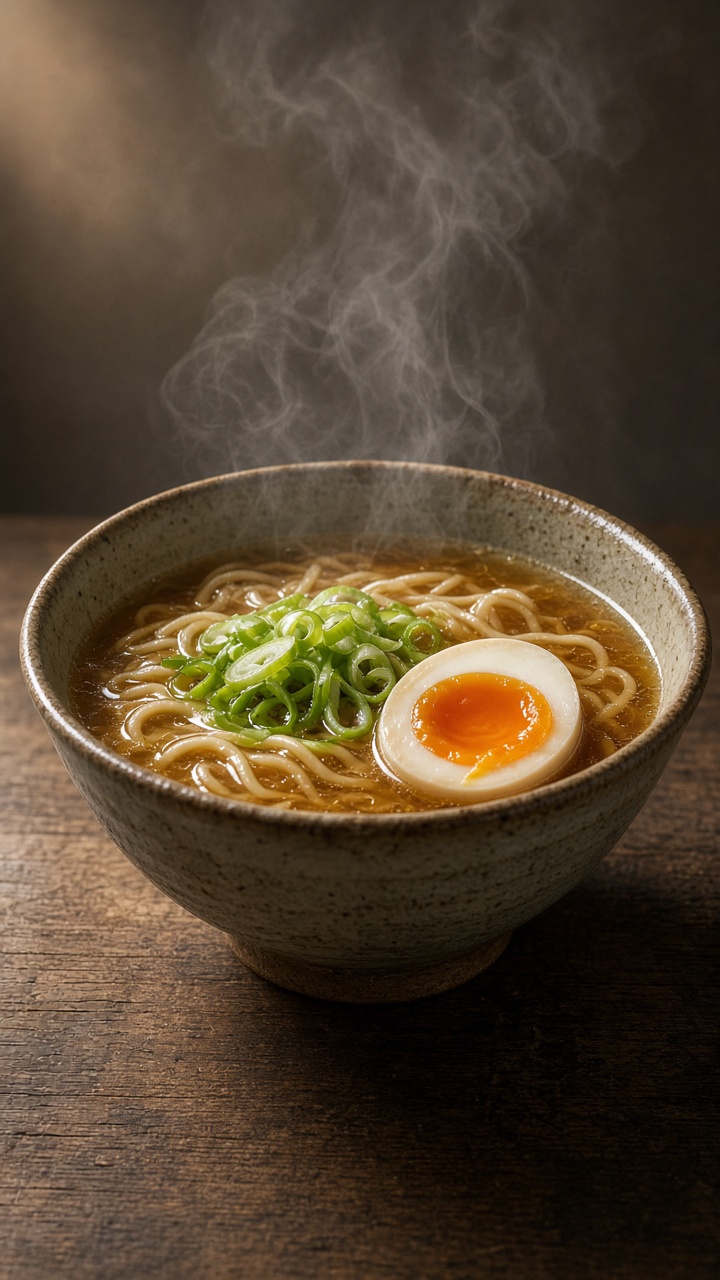
Every cuisine has this dish and every one of them photographs the same way: a brown circle. Moussaka, stifado, a curry, a chilli, a cassoulet — the cooking is the point and the cooking is invisible, because it happened hours ago inside a pot.
What a camera can see is the surface, and the surface of a stew is uniform by definition. There are no edges to catch light, no height to cast a shadow, and usually one colour across the whole bowl. Overhead light makes it worse: it removes the only relief the dish had.
Which is why the fix is never lighting alone. It is what sits on top.
Why your photos are costing you sales
On a delivery menu this is the dish that loses to the burger next to it every time, and not because it is worse. It is because the burger has layers, a bun, a colour break and a height, and the stew has none of those in a photograph.
The other cost is that the honest photograph — the one that looks exactly like what arrives — is the one that performs worst. So a kitchen with good food and honest pictures gets fewer orders than one with worse food and a photographer, which is a bad outcome for everyone including the customer.
The scenes that suit your work
A handful chosen for what you sell, out of the full library.
It has to still be your item
Give the surface something to do before you photograph it. A swirl of yoghurt, a scattering of herbs, a piece of bread resting on the edge, the meat lifted slightly proud of the sauce — anything that breaks the plane and casts a small shadow. This is not styling for its own sake; it is giving a camera the relief the dish genuinely has and a flat photograph destroys.
Then use the steam. Of every dish in a kitchen this is the one where steam earns most, because heat is what a stew is selling and it is the only thing a still image can show. Shoot from slightly above, not directly overhead — straight down flattens the bowl into a disc.
- Relief and shadow on a dish that has neither by nature
- Steam, which is the only way a still image says hot
- A bowl that reads as depth rather than as a disc
- Honest photographs that can compete with styled ones
Three steps, about a minute
01
Upload your photos
Two or three angles on a phone is plenty. We cut the background automatically.
02
Pick your scenes
Tick as many as you like from 56 staged settings, or describe your own.
03
Get your shots
They arrive together in your gallery, ready to download for a listing or a post.
Questions people ask before they sign up
- Should I add garnish that is not normally served?
- No. Garnish what actually goes out. A customer who receives a plainer bowl than the photograph promised leaves the review that costs you the next ten orders.
- Bowl or plate?
- Whatever it is served in. A shallower vessel photographs better because more of the surface is visible, but changing the vessel for the camera is the same problem as adding garnish.
- My kitchen has no daylight at all.
- That is the case this exists for. Shoot under whatever you have, keep it sharp, and the daylight is what gets replaced.
Also sells like you
Brown food in a bowl is the hardest photograph in any kitchen
Start with 3 free images. No card, no account.
Try it free